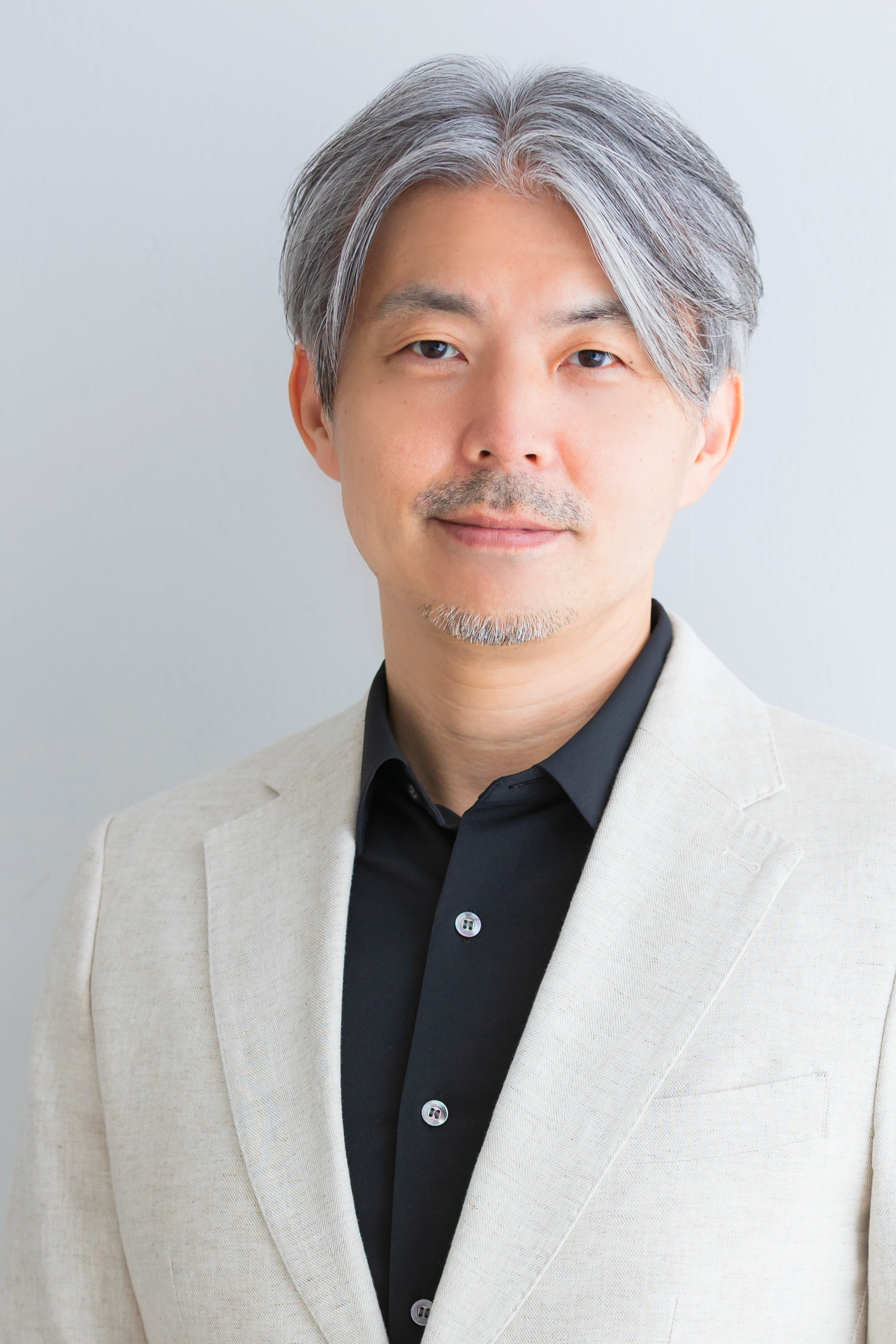
Makito Shibuya
Composer / Executive Director,”Wanon” General Incorporated Association
Born in Sendai City, Miyagi Prefecture in Japan, in 1976, Makito Shibuya graduated from Miyagi University of Education and initially pursued a career as a composer and cellist before relocating to Tokyo. Currently, he works as a music teacher at a private school in Tokyo.
The surname “Shibuya” is pronounced the same as the famous place name Shibuya in Tokyo city Japan. “Makito” means “shepherd” in English, a name with biblical significance.
Shibuya’s compositions are rooted in classical music, encompassing piano works, chamber music, choral pieces, and orchestral compositions. His works, known for their accessible and distinctly Japanese sensibility, are available across three original CDs. Recently, he has focused on projects highlighting Japanese culture and identity, incorporating traditional instruments such as shakuhachi, biwa, koto, shō, and taiko, as well as collaborating with Noh and Ryukyuan music. He also provides compositions for amateur and professional ensembles and is an ongoing composer and arranger for concert projects with Taiwanese Juilliard alumni.
Notably, Shibuya collaborated with Kanze School Noh artist Reijiro Tsumura, dancer/choreographer Kaiji Moriyama, and dancer Koichi Omae, who performs with a prosthetic leg, to create a theatrical production based on Kenji Miyazawa’s Ame ni mo Makezu (“Be Not Defeated by the Rain”). This work, featuring multiple traditional Japanese instruments, cello, and tenor singer Kei Fukui, has been performed at the Cerulean Tower Noh Theatre and other venues, earning widespread acclaim. Another recent work, Shuri, which fuses Ryukyuan musical traditions with Noh, was created in honor of the Shurijo Castle destroyed in 2019 and was performed to acclaim at events such as the Koganei Takigi Noh in Tokyo (2021) and the National Theatre Okinawa (2023).
In 2025 he composed and served as music director for 鬼問 (Ki-Mon), his second collaboration with Kaiji Moriyama. The piece premiered at the 47th Koganei Takigi Noh and was met with great acclaim.
Shibuya’s internationally celebrated TAMAKI -TORUS- has been presented at events including the Besançon International Early Music Festival and the Copenhagen World Music Festival. Featuring traditional Japanese instruments, Noh, and vocal music, this bold work was also performed at the Sagrada Familia Crypt in Barcelona to a full house, with high praise from the Gaudi family and Japanese Consul General.
His versatility also extends to film, contributing music to the official selection of the 41st Montreal International Film Festival, Dressing the Passing of Time (directed by Ryu Miyake), a documentary on the Japanese fashion brand matohu, renowned for integrating Japanese aesthetics into fashion design.『うつろいの時をまとう』予告編
In 2024, Shibuya received critical acclaim for his work on the dance-theater adaptation of the new Noh play Golden Sakura, written by scholar and author Rimbou Hayashi, directed and choreographed by Naoya Homan, and featuring performances by Reijiro Tsumura and Akira Akiyama. He has also increasingly contributed compositions and arrangements for Taiwanese performers.
As Executive Director of Wanon, Shibuya works to promote interest in Japanese music and traditional performing arts and to foster international cultural exchange. He serves as an advisor to the Japan-Taiwan Cultural and Arts Exchange Association. His works have been performed not only in Europe but also in Southeast Asia, the Middle East, and beyond.
渋谷 牧人
作曲家/一般社団法人「和音」専務理事
1976年日本国の宮城県仙台市出身。宮城教育大学卒業後は主に作曲・チェロ演奏者として活動し、その後拠点を東京に移して活動。また音楽教員として東京都内私立校に勤務。
作曲作品はクラシック音楽をベースとした、ピアノ曲、室内楽や合唱曲、オーケストラ作品を主とする。耳馴染みよく聴きやすい日本的な感性を大切にした耽美的な作風であり、これまでオリジナル楽曲によるCD3枚をリリース。近年では日本人の文化やアイデンティティを大切にした作品も多く、尺八、琵琶、箏、笙、太鼓などの和楽器や能楽、琉球音楽とのコラボレーショ作品の制作を精力的に行っている。また多くのアマチュア楽団やプロ演奏家への楽曲提供を行い、近年では台湾のジュリアード音楽院出身音楽家たちの作編曲者として継続的に活躍中。
特に観世流能楽師の津村禮次郎、ダンサー・振付師としても活躍中のダンサー森山開次、義足のダンサーとして活躍中の大前光市らと制作した宮沢賢治が題材の舞台「雨ニモマケズ」は複数の和楽器とチェロにテノール歌手の福井敬の歌も織り交ぜた作品で、セルリアンタワー能楽堂など多くの場所で再演され続け好評を博している。また琉球組踊音楽と能楽を融合させた舞台「首里」は、琉球音楽家とコラボレーションをしながら2019年に焼失した首里城の復興を願い沖縄の歴史に敬意を評した作品であり、2021年の東京小金井薪能、2023年には「国立劇場おきなわ」で公演。2025年には森山開次との2作目の協働となる「鬼問」の作曲と音楽監督を担当。第47回小金井薪能にて初演され好評を博した。
ブザンソン国際古楽音楽祭、コペンハーゲンワールドミュージックフェスティバルに和楽器と能と歌を融合した挑戦的な作品である「環(TAMAKI)-TORUS-」を出品し好評を博し、さらにバルセロナのサグラダファミリア地下聖堂において同作品による公演を開催しガウディ家や日本総領事らも絶賛する満員御礼の公演となった。
また第41回モントリオール国際芸術映画祭オフィシャルセレクション作品であり、日本の美意識を服飾デザインに生かした作風で有名なmatohuのドキュメンタリー映画「うつろいの時をまとう」(監督:三宅流)の音楽を担当するなど映像作品への楽曲提供も行っている。
2024年には作家で国文学者の林望氏の新作能「黄金桜」を舞踊劇にした作品(演出・振付は宝満直也、共演は津村禮次郎・秋山瑛)も好評を博した。
近年は台湾の演奏家への楽曲提供やアレンジャーとしての活動も多く手がけている。
一般社団法人「和音」の専務理事として日本の音楽や伝統芸能への関心を高める活動と、国際文化交流を促進する活動を行い、日本台湾文化芸術交流会顧問も務める。その他ヨーロッパ諸国以外にこれまで東南アジアや中東諸国などの地域でも作品が演奏されるなど精力的に活動を続けている。
※「渋」という漢字が和製字のため中華圏では「渉谷」と表記され親しまれている。
 Makito SHIBUYA Official Website